
Hola a todos. Hoy publicamos un nuevo evento, al que pueden acceder en los cambios al menú. Que lo disfruten
Hello everybody. Today we post a new event, to which you can access through the menu changes. Enjoy.
JLZenizo

Hola a todos. Hoy publicamos un nuevo evento, al que pueden acceder en los cambios al menú. Que lo disfruten
Hello everybody. Today we post a new event, to which you can access through the menu changes. Enjoy.
JLZenizo
Sights, what’s the difference?
|
Hola a todos, ¿Qué tal están tirando? Hace unos días un vendedor me sugirió cambiar mi mira, de una Sure-Loc Contender-X a una Axcel Achieve-RX. Las razones que me daba eran que es una mira de ajuste más preciso y una construcción más robusta. Me puse a pensar si tenía razón, ya que la mira que uso ya tiene bastante tiempo, y posiblemente algo de desgaste. Lo primero que hice fue revisar mi mira para saber en qué condición se encuentra. Regularmente le doy un mantenimiento cada 6 meses, la limpio y lubrico, aprieto todos los tornillos que deben estar apretados y reviso que las piezas que pueden sufrir desgaste no estén demasiado gastadas y que tenga un recorrido suave en cada eje y con cada click. Mi mira está en muy buenas condiciones. Después realicé una pequeña investigación, les presento mis resultados y conclusiones. Comparativo de productos: Basado en la información publicada en Internet se obtuvo la siguiente tabla. |
Hello everybody, how is your shooting going? Some days ago a dealer suggested me to change my sight, from my Sure-Loc Contender-X to an Axcel Achieve-RX. The reasons he gave me were that it is a sight with more precise adjustments and more robust construction. And it got me thinking if he was right, mostly because my sight has some mileage, and possibly some wear. The first thing I did was to check the wear state of my sight. I regularly give it maintenance every six months, I clean and lubricate it, lock the screws that should be locked and check the wear parts not to be too damaged and that the sight has a smooth travel on each axis and with each click. I feel confident that my sight is in very good condition and is as reliable as ever. Afterwards I made a little research; I give you the results and conclusions. Product Comparison: Based on the information available on internet I got the following table. |
| Comparativo | Comprison | (Pulgadas/Inches) | |||||
| Modelo | AX4500 | Quest-X | Contender-X | Ultima | Model | ||
| Marca |
Axcel |
Axcel | Sure-Loc | Sure-Loc | Shibuya |
Shibuya |
Brand |
| Altura |
4.375 |
4.5 | 5.5 | 5.5 | 4 |
4 |
Height travel |
| Extención |
9 |
9 | 9 | 9 | 9 |
9 |
Extension |
| Resolucion-H |
0.00156 |
0.00156 | 0.0020 | 0.0020 | 0.0016 |
0.0079 |
Resolution V |
| Resolución-V |
0.00156 |
0.00156 | 0.0020 | 0.0020 | 0.0016 |
0.0031 |
Resolution H |
| Clicks/ciclo-V |
20 |
40 | 10 | 10 | 20 |
10 |
Clicks/rev-V |
| Clicks/ciclo-H |
20 |
20 | 10 | 10 | 20 |
10 |
Clicks/rev-H |
| Viaje/rev-v |
0.0625 |
0.0625 | 0.0200 | 0.0200 | 0.0313 |
0.0787 |
Travel/rev-V |
| Viaje/rev-h |
0.0625 |
0.0625 | 0.0200 | 0.0200 | 0.0313 |
0.0313 |
Travel/rev-H |
| Precio/Cost usd |
360 |
295 | 350 | 260 | 340 |
300 |
Lancaster Archery |
| Precio/Cost usd |
386 |
309 | 336 | 250 | 220 |
196 |
Alt Services |
| Opc. | Al/Carbon | Al/Carbon | Al/Carbon | Al/Carbon | |||
|
Como pueden observar la diferencia más grande en términos de precisión es la cantidad de clicks por vuelta que ofrece Axcel. ¿Pero en realidad que diferencia ofrece una de la otra? Con la información disponible en internet hice la siguiente tabla. |
You can see the real difference in terms of precision is the quantity of clicks per revolution of the Axcel sights. But how much difference is it really one from another? With the information available in internet I’ve gathered the following table. |
| Modelo | Achieve RX | AX4500 | Quest-X | Contender-X | Ultima | Dual Click | Model |
| Marca | Axcel | Axcel | Sure-Loc | Sure-Loc | Shibuya | Shibuya | Brand |
| Jalon |
28″ |
28 | 28 | 28 | 28 |
28 |
arrow lenght |
| Extensión |
9″ |
9 | 9 | 9 | 9 |
9 |
Extension |
| Adicional |
1″ |
1 | 1 | 1 | 1 |
1 |
additional |
| total |
38″ |
38 | 38 | 38 | 38 |
38 |
total |
| ajuste | 0.00156″ | 0.00156 | 0.00200 | 0.00200 | 0.00156 | 0.00787 | adjustment |
| a 70m (mm) |
2.87 |
2.87 | 3.68 | 3.68 | 2.88 |
14.50 |
at 70m (mm) |
|
Como pueden ver no hay mucha diferencia en ajuste, ya que al transportar el ajuste de un click a 70m vemos que la diferencia entre mi Sure-Loc y las Axcel es de apenas 0.8mm, e incluso la Shibuya Ultima ofrece la misma resolución de la Axcel a una fracción del costo. El otro atributo de Axcel es su extensión aligerada, que ofrece una reducida resistencia al viento, pero también tenemos esta característica en las Sure-Loc. Además comparado con el arraste que ejercen los estabilizadores o el maneral, creo que podemos no preocuparnos por una extensión sólida. Espero que los datos sean de su utilidad y les ayuden a decidir que mira adquirir. Yo por lo pronto me quedo con mi Sure-Loc, si cambio de mira optaré por otra similar. Saludos y sigan entrenando duro. JLZenizo |
As you can observe, there is not much difference in adjustments. As we translate them to the target at 70m we see that the difference between my Sure-Loc and the Axcel is only 0.8mm, and even the Shibuya Ultima offers the same resolution as the Axcel at a fraction of the cost.The other characteristic of the Axcel is its perforated extension for reduced wind resistance, but I have that in my Sure-Loc too. Besides compared to the drag from the stibilizers or the riser, I beleave we can avoid worrying about a solid extension, don’t you think?I hope this is useful to you and help you decide what sight to buy. Personally I’ll stickwith my Sure-Loc, when I change my sight I’ll choose something similar.
Best regards and keep up the hard training. JLZenizo |
|
Hola a Todos. Después de unas “vacaciones” forzadas de tres semanas aquí estamos de regreso, entrenando duro y con muy buenos resultados. El otro día en la conversación cotidiana entre rondas surgió el tema del Target Panic. Como saber si uno lo tiene y como se soluciona. Después de escuchar las opiniones e ideas de los demás les expongo mi proceso de solución, el cual me ayudó a mi y me ha permitido ayudar a otros en cuestión de horas o días. El target Panic es un problema que llegan a tener muchos tiradores de todas las disciplinas. Surge del intenso deseo del tirador a acertar justo al blanco. El problema se puede presentar de varias maneras: · El tirador no puede ejecutar el tiro a menos que se encuentre apuntando justo al centro · El tirador no puede apuntar justo al centro · El tirador no puede permanecer apuntando al centro durante el disparo · Entre otros. Hay personas que aprenden a vivir con ello y ajustan su técnica, apuntan compensado, tiran bajo la presión del tiempo, o sencillamente se conforman con no poder dar en el blanco. Hay varios métodos y ejercicios propuestos, cada uno con su grado de éxito y el tiempo en que reflejan resultados. Ejercicios que varías desde práctica sin carátula, juegos como tirar poker, etc. Mi método es bastante simple. Se basa en involucrar la mente consciente en el proceso de solución, y en general del tiro. Si bien la acción de apuntar debe ser subconsciente, ya que es la única parte del tiro que el cerebro sabe hacer realmente. Los pasos son los siguientes: 1. Primero el tirador usará una distancia en la que se sienta seguro, en la que sepa que si falla no sucederá nada. En mi caso 30m es suficiente 2. El tirador ajustará la mira para que los tiros peguen deliberadamente fuera del centro. Arriba o abajo, izquierda o derecha. Cada quien decide. 3. Ahora el tirador se dedicará a hacer forma, apuntando al centro. Sabemos que los disparos no caerán en el centro, así que el ejercicio es a agrupar 4. Una vez que el tirador puede agrupar fuera del centro, apuntando correctamente y sin sobresaltos, vamos regresando el ajuste de la mira, poco a poco. Cada ronda más cerca. Hasta que en unas 8 rondas el grupo vuelve al centro de la carátula 5. Si el tirador vuelve a tener problemas o sobresaltos se puede regresar a cualquier etapa anterior. Estos simples pasos me han ayudado a mi en varias ocasiones, y a muchos otros. Como pueden ver es tan simple como relajarse al apuntar y quitar el resultado de la ecuación. Y después añadir el resultado de nuevo, una vez que el tirador está cómodo tirando correctamente y apuntando al centro, pero ahora el tirador ha aprendido que el resultado no es tan importante como realizar correctamente el disparo, porque lo demás es un RESULTADO. Espero les sea útil. Saludos y sigan entrenando duro. |
Hello Everyone. After a 3-week forced “Vacation” we’re back, training as hard as always and with results reflecting it. The other day during training, in the between-rounds conversation an interesting subject came up, Target-Panic. How to know if one has it and how to solve it. And after hearing the different opinions and ideas from the others I bring you my personal method, which has helped me and others to overcome it in matter of hours or days. Target Panic is a problem known to many shooters from all disciplines. It comes from the intense desire of the shooter to hit the center of the target. The problem can present in many variants: · The shooter can’t perform the shot unless he is aiming right on center of the target · The shooter can’t aim right on center of target · The shooter can’t keep aiming right center during the shot execution · Among others Some people learn to live with it and adjust their technique, aiming off-center, shooting on the clock, or simply accepting they won’t be able to hit the target’s center. There are various methods and exercises available, each one with its grade and time to success. Exercises vary from target-less practice, or games like shooting Poker, among others. My method is quite simple. It is based on involving the rational mind into the process of the solution, and in general of the shot. Its known that in general the aiming should be subcontious as it is the only part the brain actually knows to do. The steps are as follows: 1. First the shooter will go to a distance where he feels comfortable, in which he knows that if he misses there is no problem. In my case 30m is enough. 2. The shooter will adjust the sight so he will hit out of the center deliberately. Up, down left or right is each one’s choice. 3. Now the shooter will begin focus on shooting form, aiming to the center of target. We know he won’t hit the center, so the goal is to group the shots 4. Once the shooter is grouping out of center, aiming correctly and with no jumps, we will now start to turn back the sight adjustment, a little each round. Closer and closer to center until after 8 round or so the group returns to the target center. 5. If the shooter comes around with the problems again he can return to any prior step. These simple steps have helped me in various occasions, and to many others. As you can see it is as simple as relaxing on aiming and removing result from the equation. And then adjusting the result back in, once the shooter is shooting correctly and aiming to the target center, but now the shooter has learned that the result isn’t as important as executing the shot correctly, because IT IS RESULT. Hope it is usefull. Keep on hard training |
JLZenizo
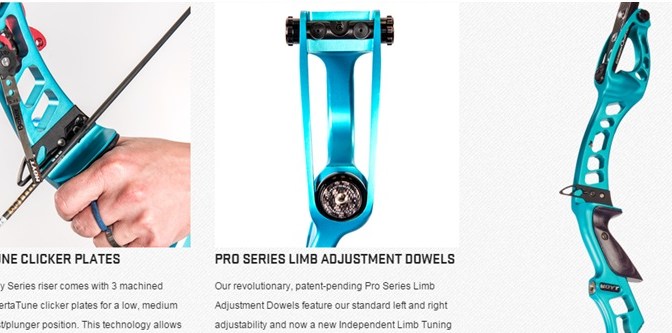
| Hola a todos, Hoy me enteré de que Hoyt anuncia este nuevo maneral.Diseñado con la geometría del Formula RX y GMX, una geometría más deflex, diferente a los HPX, ION-X, y Prodigy, Prodigy XT, que son más réflex para favorecer una mayor velocidad.Recordemos que Brady Ellison fue prácticamente invencible con el RX, no así con el HPX. Una simple muestra de que uno se tiene que acomodar con su arco.
Les dejo la Pagina para que le echen un ojo. |
Hello Everybody, today I found out that Hoyt has launched this new riser on april.Designed with a deflex geometry like the Formula RX and GMX, different from the reflex geometry of the HPX, ION-X, GPX and Prodigy, Prodigy XT that favors a higher speed.We can remember that Brady Ellison was almost invincible with the RX, but not quite with the HPX. An example that one has to settle with its bow.
Leave you the product page for you to check it out. |
JLZenizo
|
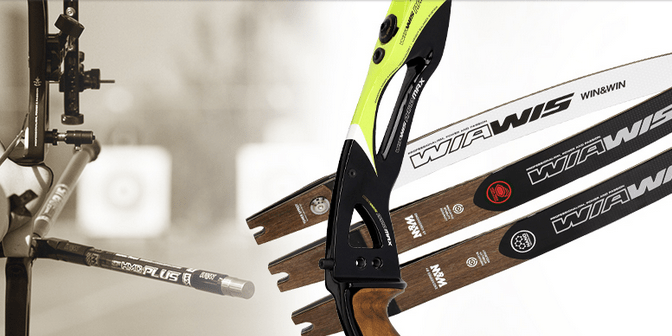
Hola a todos. Esta vez les dejo el nuevo catálogo de Win&Win para este 2015. |
Hello everyone, today I leave you the Win&Win 2015 catalog. |
JLZenizo
 Tiro con Arco, by jlzenizo